Common Myths About Guide Dogs
In this post, I want to debunk some of the most common myths about guide dogs that I’ve been asked about over the years. While guide dogs are highly visible in public spaces, there are still many misunderstandings about how they work, what their roles are, and who uses them.
Guide dogs can read traffic lights
The idea that guide dogs can read traffic lights is incorrect. Dogs are color blind and cannot determine when a light has changed. It is the handler’s responsibility to listen for traffic patterns and decide when it is safe to cross. If the dog recognizes that it may not be safe to proceed, they will demonstrate intelligent disobedience and refuse to move forward until conditions are safe.
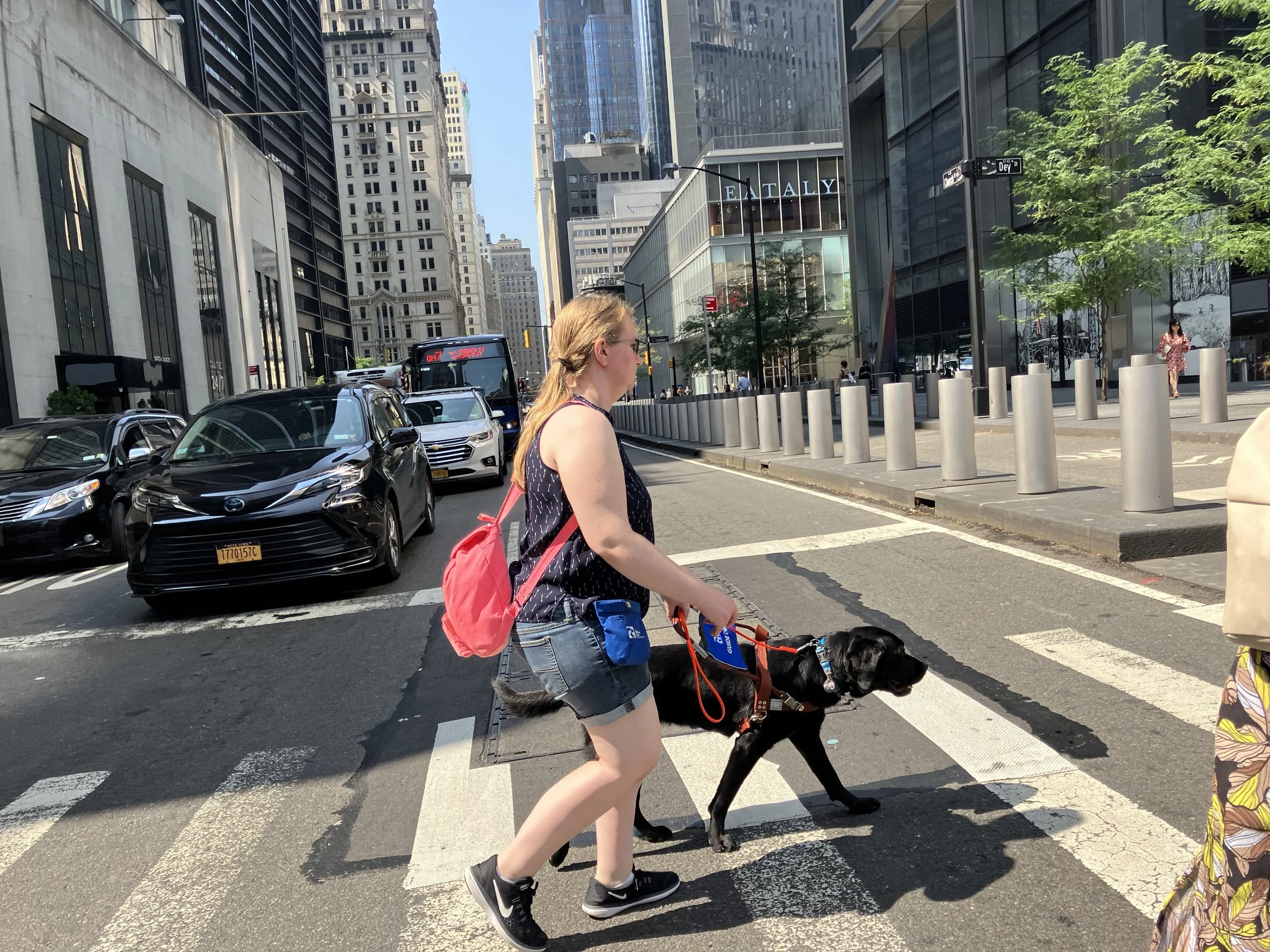
Lindsay and Eve crossing a street in New York City.
All guide dogs are black Labs
Guide dogs are not all black Labrador Retrievers. While black Labs are commonly portrayed in the media, guide dogs come in a variety of breeds and colors. These include yellow Labs, chocolate Labs, Golden Retriever crosses, Poodles, and German Shepherds.
Guide dogs are GPS devices
Guide dogs are not GPS systems and do not automatically know where their handler needs to go. The handler must provide directions to reach a specific destination. This is why guide dog handlers typically spend years developing strong orientation and mobility (O&M) skills, which are essential for working safely and effectively with a guide dog.
Guide dog handlers never use a white cane or sighted guide
Guide dog handlers do not rely solely on their guide dogs. A guide dog is one mobility tool, and many handlers also use a white cane or sighted guide depending on the situation. For example, a handler may use a white cane if their guide dog is sick, injured, retired, or not accompanying them. Sighted guide can also be helpful in crowded environments, unfamiliar buildings, or situations where it is the safest and most efficient option. Using different mobility techniques does not mean the guide dog has failed. Rather, it demonstrates that the handler is choosing the most appropriate tool for the environment and relying on the orientation and mobility skills that form the foundation of safe travel.
Guide dogs never get distracted
This is far from the truth. Guide dogs are still dogs, and different things can distract different dogs. Some of Eve’s biggest distractors are good-smelling food and other dogs in harness. She loves to eat and play and sometimes forgets that when she is working, those things have to wait.
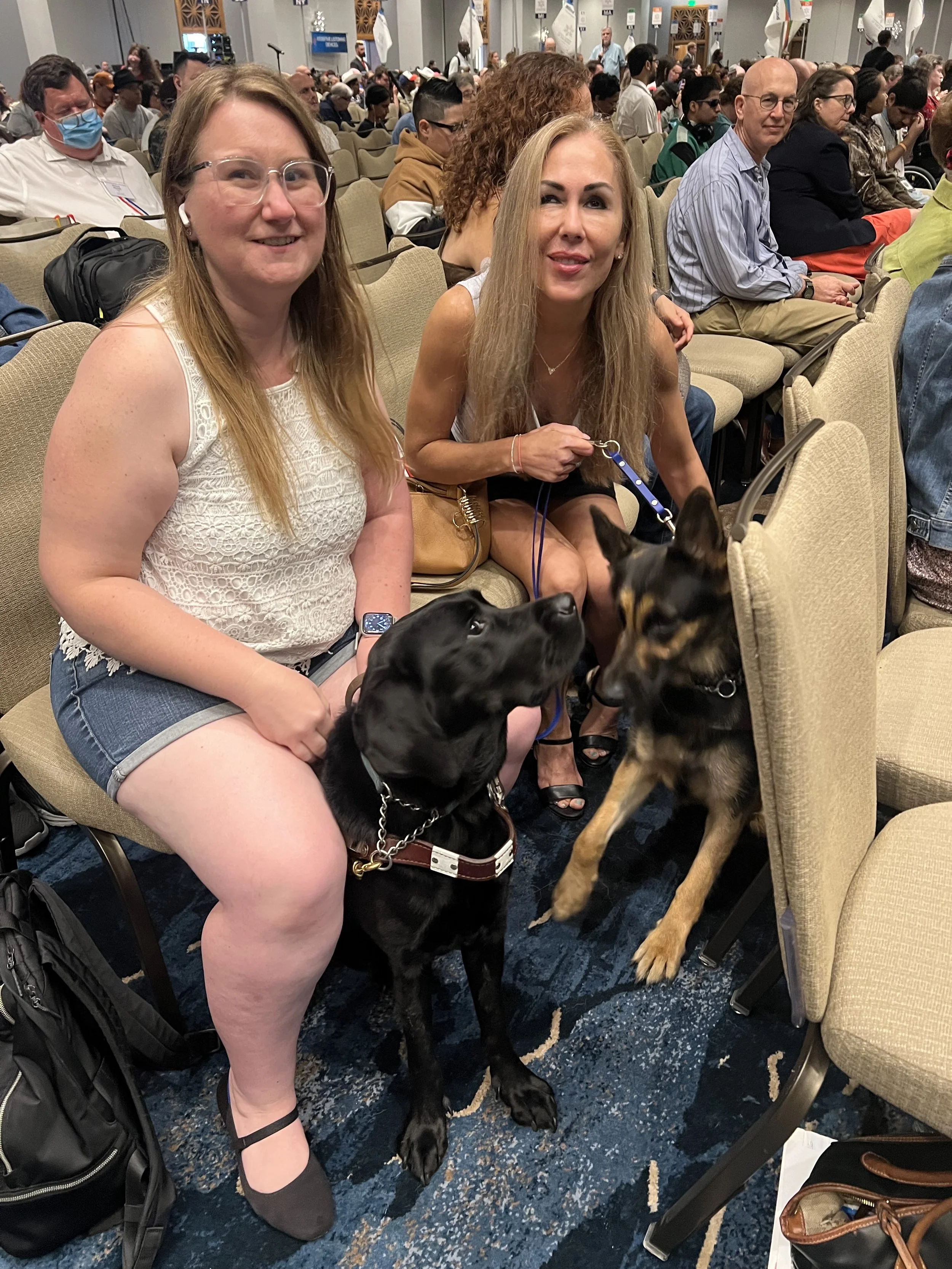
Lindsay and Irma sitting together with their guide dogs at their feet. Eve and Wonder are looking at one another, but calmly working alongside one another.
All guide dog handlers are totally blind
Not all guide dog handlers are totally blind. Some handlers, like myself, have remaining vision but are considered legally blind. Vision loss exists on a spectrum, and guide dogs support people with a wide range of visual abilities.
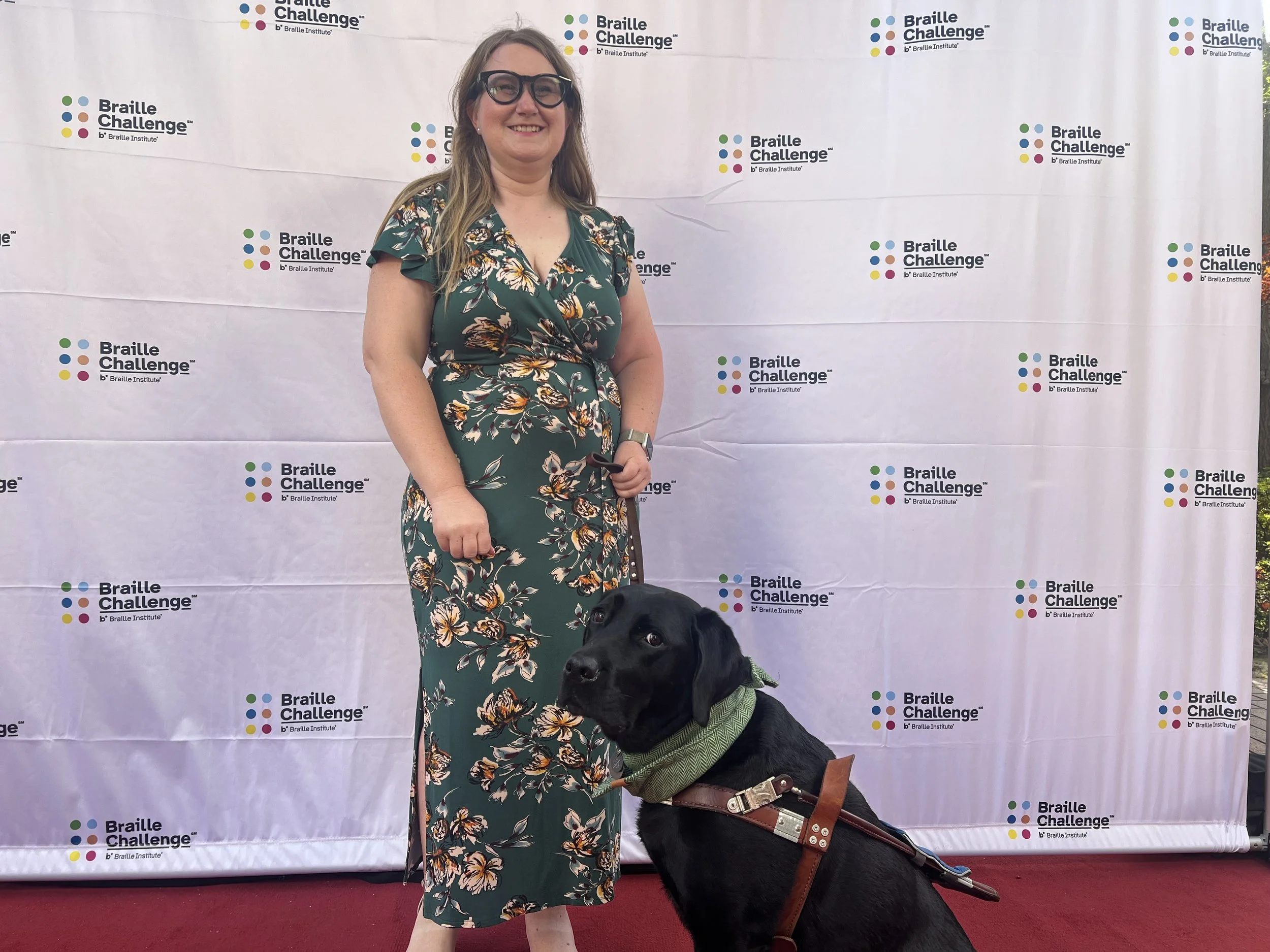
Lindsay and Eve on the red carpet at the 2026 Braille Challenge.
Emotional Support Animals (ESAs) are the same as guide dogs
Emotional support animals are not the same as guide dogs. ESAs provide comfort but are not task trained. Guide dogs are highly trained working animals that perform specific tasks related to mobility and safety.
Guide Dogs Work 24/7
Guide dogs do not work all the time. Like people, they need time off to simply be dogs. This includes playing with toys, taking sniff breaks, sleeping in comfortable beds, eating, and receiving affection from their handlers. Providing this downtime helps ensure that guide dogs remain mentally and physically healthy and able to work effectively.

Eve and Goldie napping together. Goldie is Eve’s dachshund little sister.
Guide dogs work until they die and are forced to work
In some cases, a guide dog may have a shorter working career if they develop an illness or medical condition at a young age. However, most guide dogs typically work until they are around eight to ten years old. One of the most important things a handler must consider throughout a dog’s working life is whether the dog is healthy and still enjoying the job they are doing. Guide dogs and other service animals are not forced to work. In fact, most enjoy their jobs and thrive on the partnership, structure, and purpose that the work provides. Handlers and guide dog training programs carefully monitor each dog’s physical and emotional well-being. If a dog shows signs that the work is no longer a good fit, appropriate steps are taken to reduce workload, begin the retirement process, or release the dog from training. Dogs who retire early or leave training may become pets or transition into other suitable roles. In all cases, the dog’s best interest comes first.
Guide dogs are blind
Guide dogs are not blind. A blind dog guiding a blind handler would not be safe for either of them. The dog has sight, while the handler is blind or has low vision.
Seeing Eye dogs are not guide dogs
The official term is dog guide. Terms such as guide dog or Seeing Eye dog often reflect the names of specific training programs. While the terminology may vary, all refer to dogs trained to guide blind or low-vision handlers safely.