Working on a College Campus with a Guide Dog
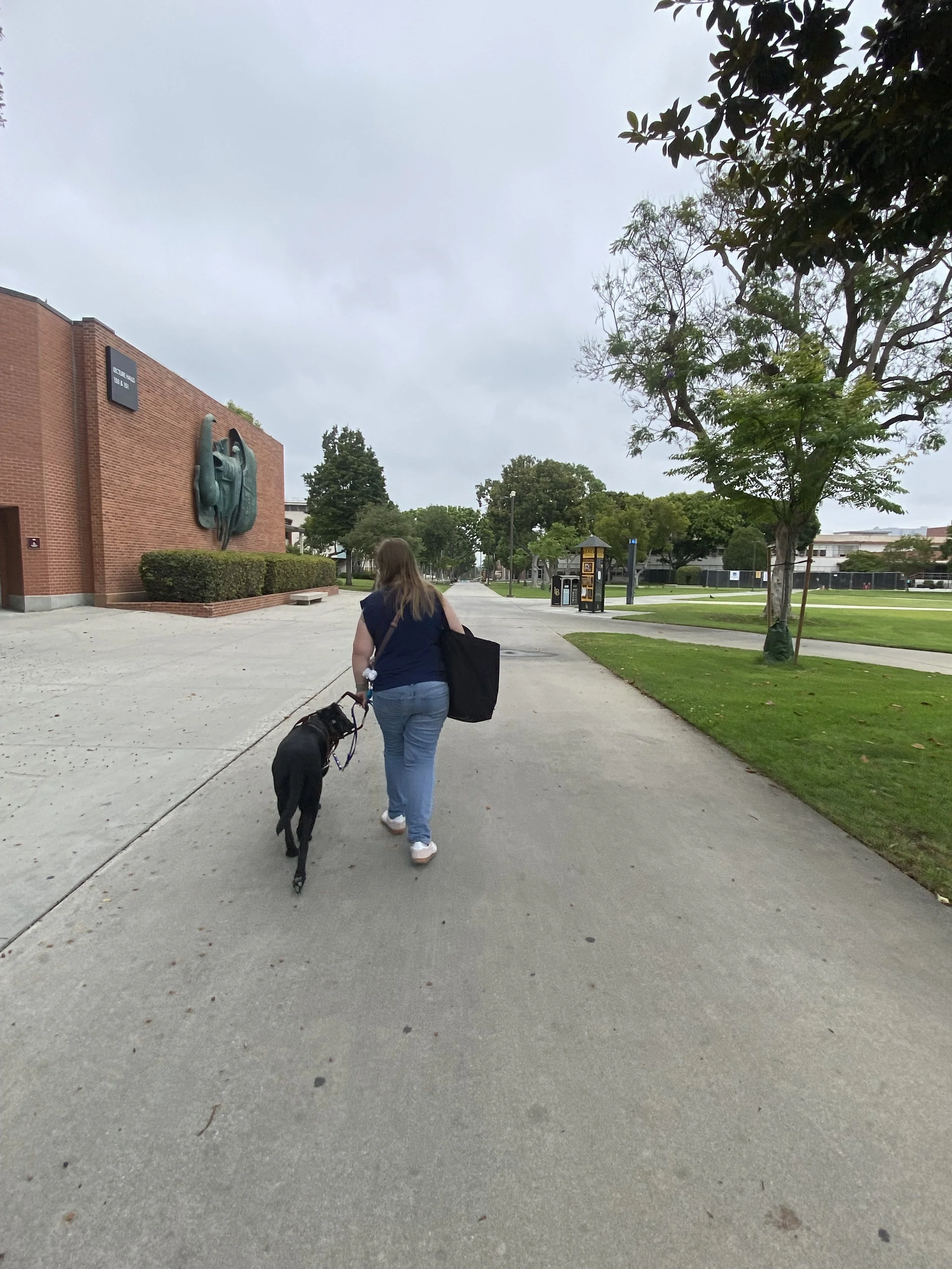
Lindsay and Eve walking down a path at California State University Long Beach.
Guide dogs may not choose the path you would use with a cane
As a result of working on a campus with nearly 40,000 students, there have been many times when Eve has chosen a different path than I would have with my cane simply because the walkways were crowded with people. To combat this, I recommend getting to know your college campus well while using a cane so that if you ever need to redirect your dog or encounter an unexpected obstacle, you can confidently find your way.
The importance of patterning
On a similar note, since your dog may not choose the same path you would with a cane, it is important to pattern them correctly. Many college campuses have several intersecting pathways that branch off in multiple directions, making it more difficult for your dog to maintain a straight line of travel. Spending time teaching these routes early can make navigating them much easier throughout the semester.
Before the semester begins, introduce your dog to your common destinations
Each semester brings a new set of classes, which means a new set of routes. If possible, show your dog the routes to your classes before the semester begins so that both of you can become familiar with them before having to navigate large crowds of students. This advice also applies if you are beginning a new job on a college campus or if your office location changes.
Students will still ask to pet your dog
Just as on K–12 school campuses, college students may ask to pet your guide dog. I believe this is simply because students come from many different backgrounds and experiences. As a handler, all you can do is politely educate those who ask, as this may be their first encounter with a guide dog.
Expect unique traffic checks
While working on the college campus where Eve and I work, we have encountered your typical car traffic checks, pedestrian traffic checks, and even a traffic check involving an earth mover. In fact, we encountered the earth mover within the first three weeks of coming home as a new team.
As I walked from my office to the paratransit pickup location, we came across an active construction zone where an earth mover was operating as the campus prepared for the upcoming fall semester. Although it was an unexpected experience so early in our partnership, Eve calmly worked through the traffic check just as she had been trained to do. It was a great reminder that guide dogs are trained to safely navigate far more than the situations we encounter every day.
Construction, maintenance projects, and temporary detours are common on many college campuses. As routes change throughout the year, continue reinforcing new travel paths with your dog and trust the training that brought you together.
Campus events, tabling, and food distractions
Throughout the school year, college campuses often host club fairs, resource fairs, career fairs, Disability Pride events, and many other activities where organizations set up tables along common walkways. These events can create new obstacles while also introducing food distractions for guide dogs.
If your dog is especially food motivated, it may be helpful to use a Gentle Leader during these events, as I have found it provides Eve with an extra reminder to stay focused while navigating through tempting distractions. However, I only use it when the weather permits. On particularly hot or humid days, I leave it off because it can make it more difficult for Eve to cool herself effectively. Every dog is different, so be sure to use the equipment that works best for your team while always keeping your dog's comfort and safety in mind.
If you are the one hosting a table, consider using a tablecloth that extends to the floor. A few weeks ago, while Eve and I were representing my office at a Disability Pride event, I found that having a tablecloth helped create a visual barrier around her while she rested underneath the table. This reduced the likelihood that visitors would immediately notice her and become distracted from the conversation or the information we were sharing. It also gave Eve a quieter space to relax while I interacted with attendees.
Large campus events can also help prepare your guide dog for experiences beyond college. If you're preparing for commencement, many of these same skills will carry over. I share additional thoughts about navigating graduation ceremonies with a working dog in my blog post, Graduation Tips for Service Dog Teams.
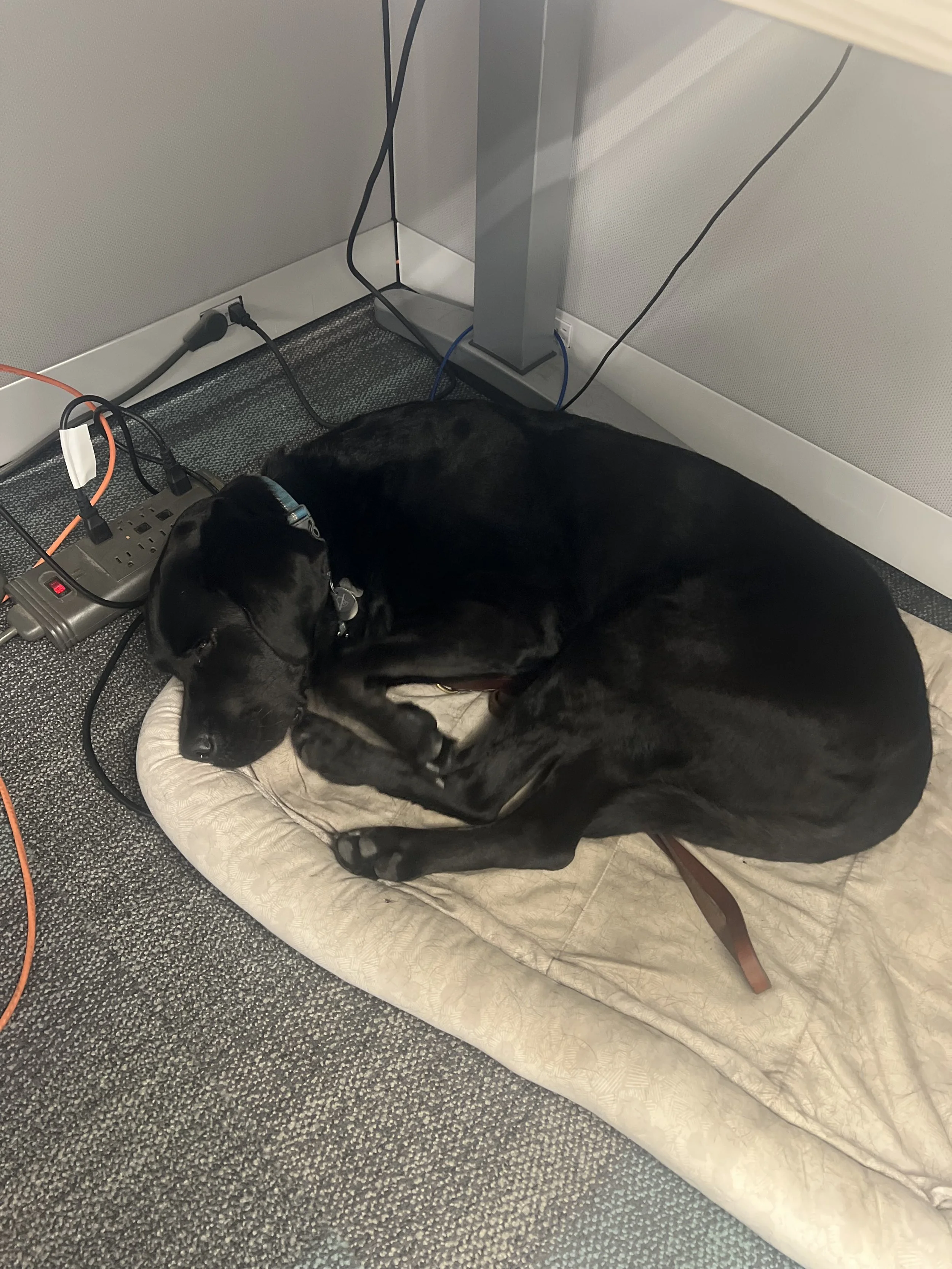
Eve taking a nap in my office.
You may encounter pet dogs on campus
Because college campuses are public spaces, you may encounter pet dogs being walked, especially during the evening. In these situations, do your best to maintain your distance. If that is not possible, praise your dog for making good choices and staying focused.
Other working dogs on campus
Depending on the campus you attend or work on, there may be other working dogs. Not everyone chooses to do this, but with the other handler's permission, I always tried to introduce Eve to the other working dogs on campus. That way, if they later crossed paths in common areas, it would not be a complete surprise for either dog.
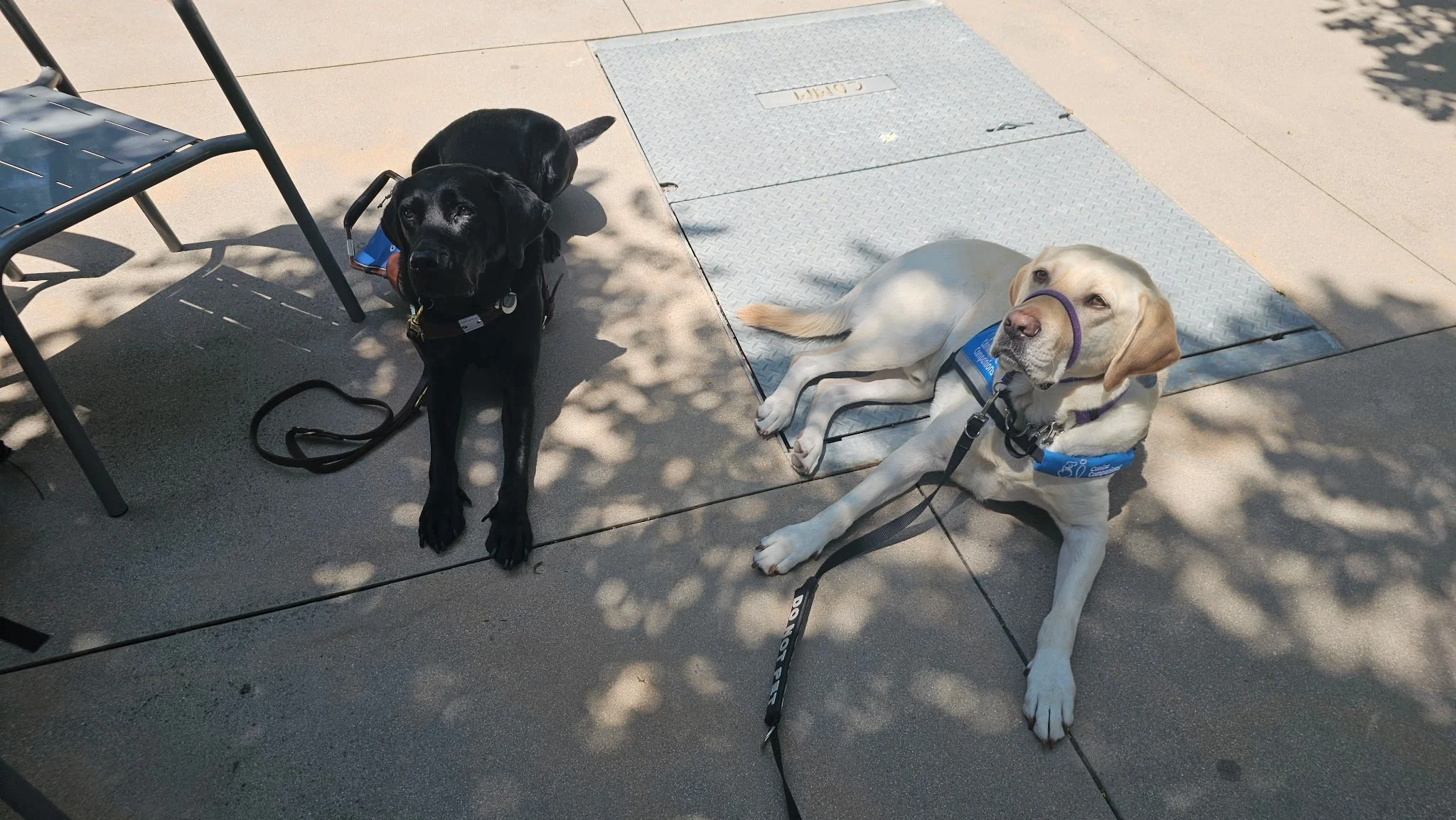
Eve and Sheldon laying together on campus in their working gear. Sheldon is a medical alert dog that works alongside his handler on campus.
Be patient with yourself and your dog
If you are a new guide dog team navigating a college campus for the first time, be patient with both yourself and your dog. Give yourselves plenty of time to get to your destination, as your routes may not be the most direct in the beginning.
Bring a bone for downtime
It may be helpful to bring a bone or other appropriate chew for your dog during downtime. I personally did this while working in my office. Occasionally, when Eve became bored, I would hear her happily chewing on her bone. Not only did it keep her entertained, but I also believe it helped her relax when she became stressed. Students and employees alike can take the same approach by allowing their guide dog to enjoy some downtime with a chew while taking a break from classes, studying, or work.
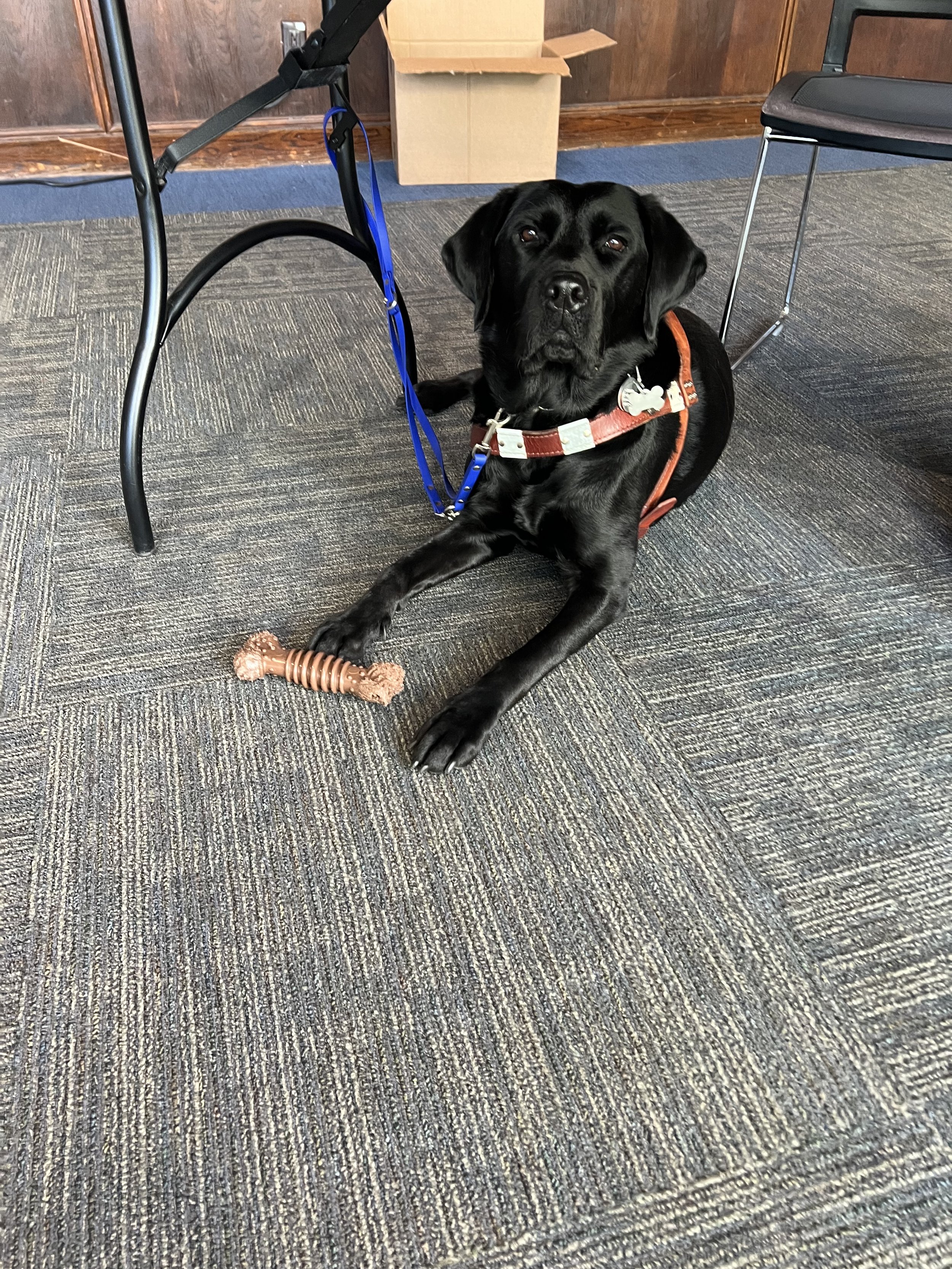
Eve with her bone between her paws during finals week.
Additional Resource
If you're interested in reading about the college experience from the perspective of someone who lived on campus with a guide dog, I recommend How My Guide Dog Transformed My College Experience by Lupe Tapia, published by Guide Dogs of America. While my graduate program was completed in a hybrid format and I did not live on campus, Lupe shares valuable insights into campus life, balancing academics with the responsibilities of caring for a guide dog, navigating construction, and gaining confidence through independent travel.

Lindsay and Eve in front of the CSULB GO Beach sign early in their partnership.
Special Thanks
A special thank you to @paulinav557 for helping with some of the student-specific aspects of campus life. While I was also a college student during the time Eve and I worked on a college campus, I attended classes in a hybrid format at a different university, so her perspective helped round out this post.