Working a Guide Dog with CP and a Visual Impairment Adaptations, Self-Advocacy, and the Journey Toward Independence
Introduction
March is Cerebral Palsy Awareness Month, and in honor of that, I wanted to share some of the tips, adaptations, and lessons that have helped me work successfully with my guide dog while living with both cerebral palsy (CP) and a visual impairment.
CP looks different for everyone. My sister, @loveuleslie, also has CP, but her experience is very different from mine. She is fully sighted, drives without adaptations, and navigates challenges related to scoliosis and a leg-length difference. For me, CP impacts the left side of my body, causing weakness, reduced dexterity, and occasional hip instability if I am not standing correctly. This weakness primarily affects my left hand and arm, which for many years made me question whether working a guide dog would ever be possible for me.
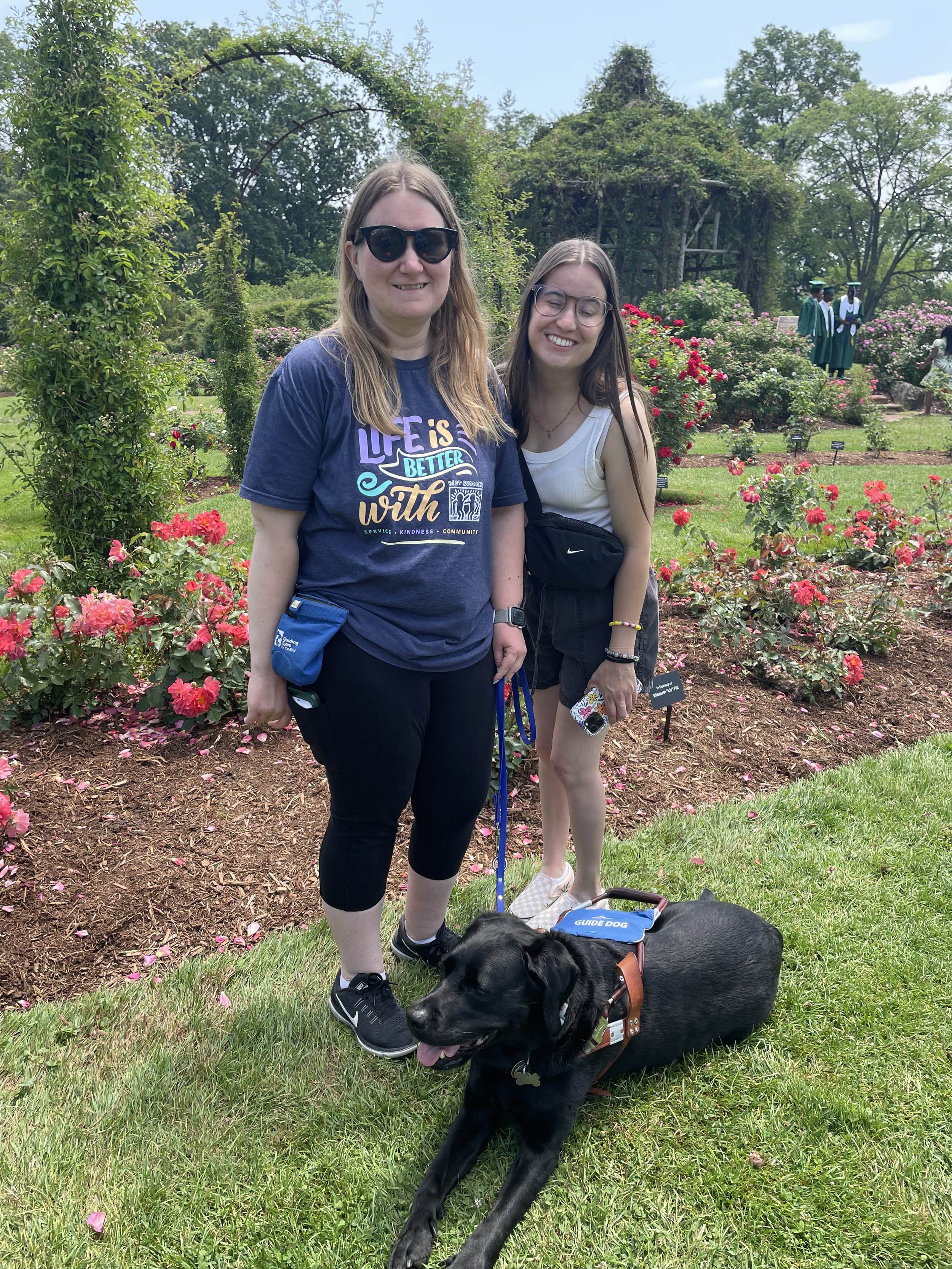
Lindsay, Leslie, and Eve in Elizabeth Garden.
As I shared in my “What I Wish I Knew at 16…” post, this dream was possible, but only with the right tools, the right people, and learning how to advocate for what my body and mind needed.
The Emotional Side of Guide Dog Training
Before any physical training began, there was a significant emotional hurdle to overcome. I almost did not get on my flight to guide dog class. The self-doubt was overwhelming, fear of failing, fear of not being capable enough, and fear of taking a spot I worried I might not deserve.
If it were not for a few close friends who talked me off that ledge, I do not know if I would have gone. They took me out to lunch before my flight, helped keep my mind off what was ahead, and reminded me why I had worked so hard to reach that point. That moment became a turning point. Sometimes independence begins not with confidence, but with community.
Three cups of Phil’s coffee.
Learning to trust my body, my instructors, and eventually my dog required just as much emotional work as physical adaptation.
Self-Advocacy and Equipment Considerations
Equipment plays an important role in how a guide dog team functions, but equipment alone is not enough. What truly makes the difference is self-advocacy.
As a new handler, it is important to speak up when something does not feel right. This might include difficulty with grip, discomfort in positioning, or a technique that does not align with your strength or dexterity. Asking for adjustments is not a sign of weakness, it is a way to build a safer, more sustainable partnership. Independence looks different for every handler, and training should reflect that reality.
Working with Occupational Therapy
After returning home with Eve, I knew the brace I was using was no longer appropriate. It had been made when I was 21, and I had not seen an occupational therapist since then. Advocating to return to OT was one of the best decisions I made.
Through OT, I received proper bracing, learned new stretching techniques, and was introduced to the TENS unit by Zynex Medical. This device helps with pain management and muscle activation in ways I had not previously experienced.
Using the Zynex Unit with Low Vision
The Zynex unit includes an LCD display, which can be challenging with limited vision. I used my MagniLink S video magnifier to learn the layout of the screen and buttons. I discovered that the backlight can interfere with magnification, but waiting for the display to dim makes it easier to adjust settings.
For non-visual access, apps such as Be My Eyes, Aira, or using Meta Smart Glasseshave been extremely helpful, especially when hands-free use is needed.
Proper Bracing and Hand Support
Through occupational therapy, it was confirmed that my previous brace was not fitting correctly. After multiple trials, we determined that I needed:
• Two ring splints to keep my ring and middle fingers straight
• A thumb abduction brace to prevent my thumb from folding into my palm
These changes significantly improved my comfort, dexterity, and ability to manage guide dog equipment safely.
Stretching and Body Maintenance
In addition to occupational therapy, I periodically visit the Stretch Lab to work on my left arm, hand, and shoulder. This service is not covered by most insurance plans, so it is not accessible to everyone. However, for those who have the option, it can be a helpful supplement to traditional therapy.
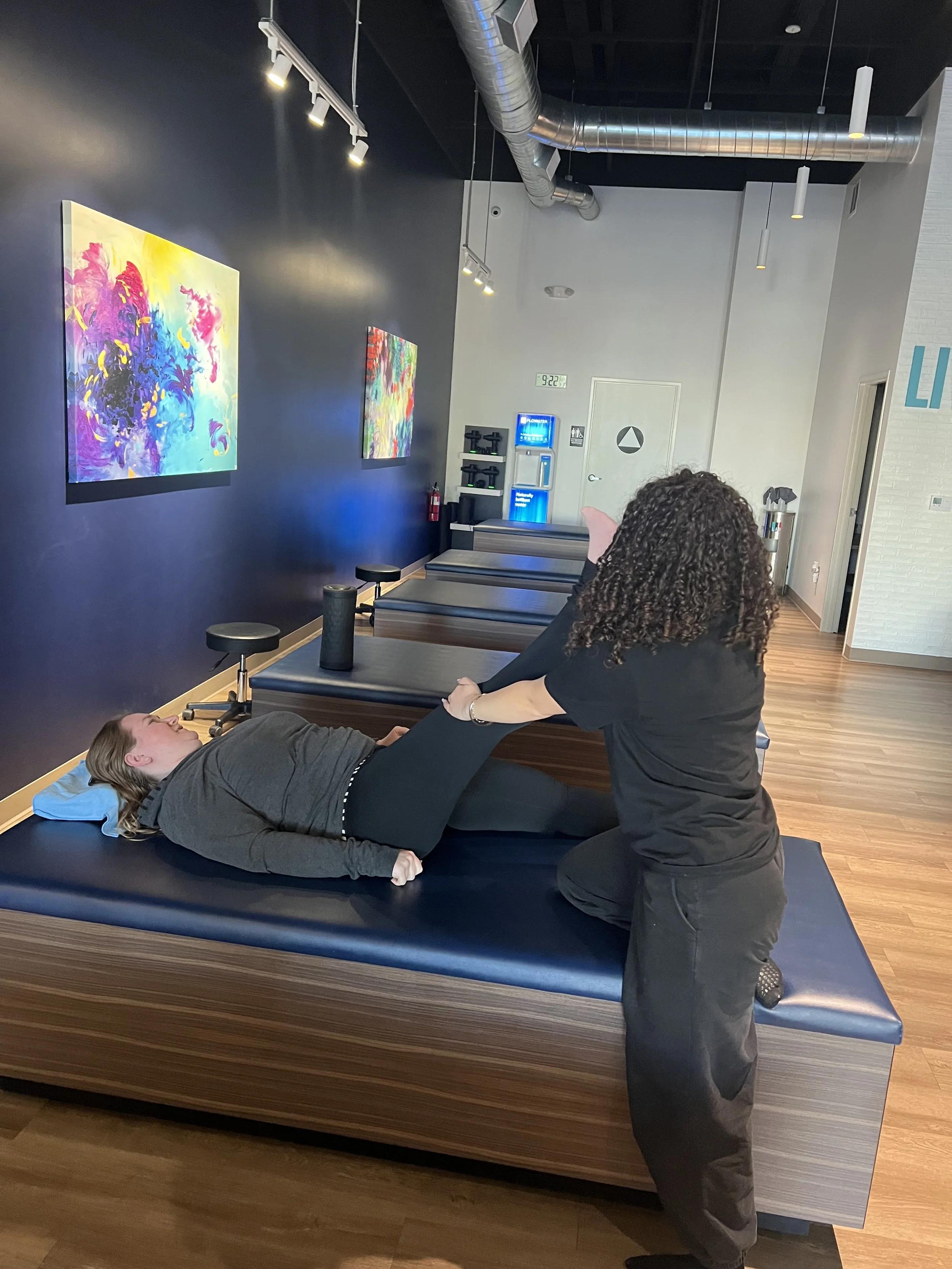
Lindsay being stretched by a flexologist.
Adapting Guide Dog Care Tasks
Teeth Brushing
Limited dexterity made brushing Eve’s teeth challenging. With guidance from the Specialized Training team, I adapted the task by placing toothpaste on a towel and rubbing it along the outside of her teeth and gums instead of using a finger brush.
Giving Medication
To give Eve pills, I use pill packs to hide medication in a putty-like treat, making the process easier for both of us.
Using Dog Shoes
Putting on shoes in extreme temperatures was initially difficult. I use my left hand to stabilize the shoe and my right hand to place each paw inside, using the floor for leverage to ensure proper placement.
I use both Ruffwear shoes and Wagwear Wagwellies. The Wagwellies are easier to open due to their flexibility. For quick errands in hot weather, Musher’s Secret is a simple alternative.
Unexpected Gains in Function
One of the most unexpected outcomes of working with a guide dog has been gaining function in my left arm that I did not have before. While this function is not typical, it is more than I previously had.
I am now able to:
• Turn my wrist more effectively
• Grip items under 20 pounds when they have a secure strap
• Grab Eve’s harness handle with my left hand before giving the cue “forward”
Leash handling still requires adaptation, and I manage it primarily with my right hand.
Safety and Individual Considerations
The strategies shared in this post reflect what has worked for me. Anyone considering guide dog work while living with CP, vision loss, or another disability should work closely with their medical providers and guide dog school to find solutions tailored to their individual needs.
Conclusion
Living with cerebral palsy and a visual impairment means navigating a world that was not designed with my body or vision in mind. Working with Eve has shown me that independence is not about doing things the “right” way, it is about finding your way. Through self-advocacy, adaptability, community support, and the right tools, independence becomes not just possible, but sustainable.
If you are on a similar journey, know that your doubts do not disqualify you. Sometimes, all it takes is a few people believing in you until you are ready to believe in yourself.