Student Teaching with a Guide Dog
As I write this post, Eve and I have officially completed our student teaching experiences one last spring and another this fall as part of my teaching credential program at San Francisco State University.
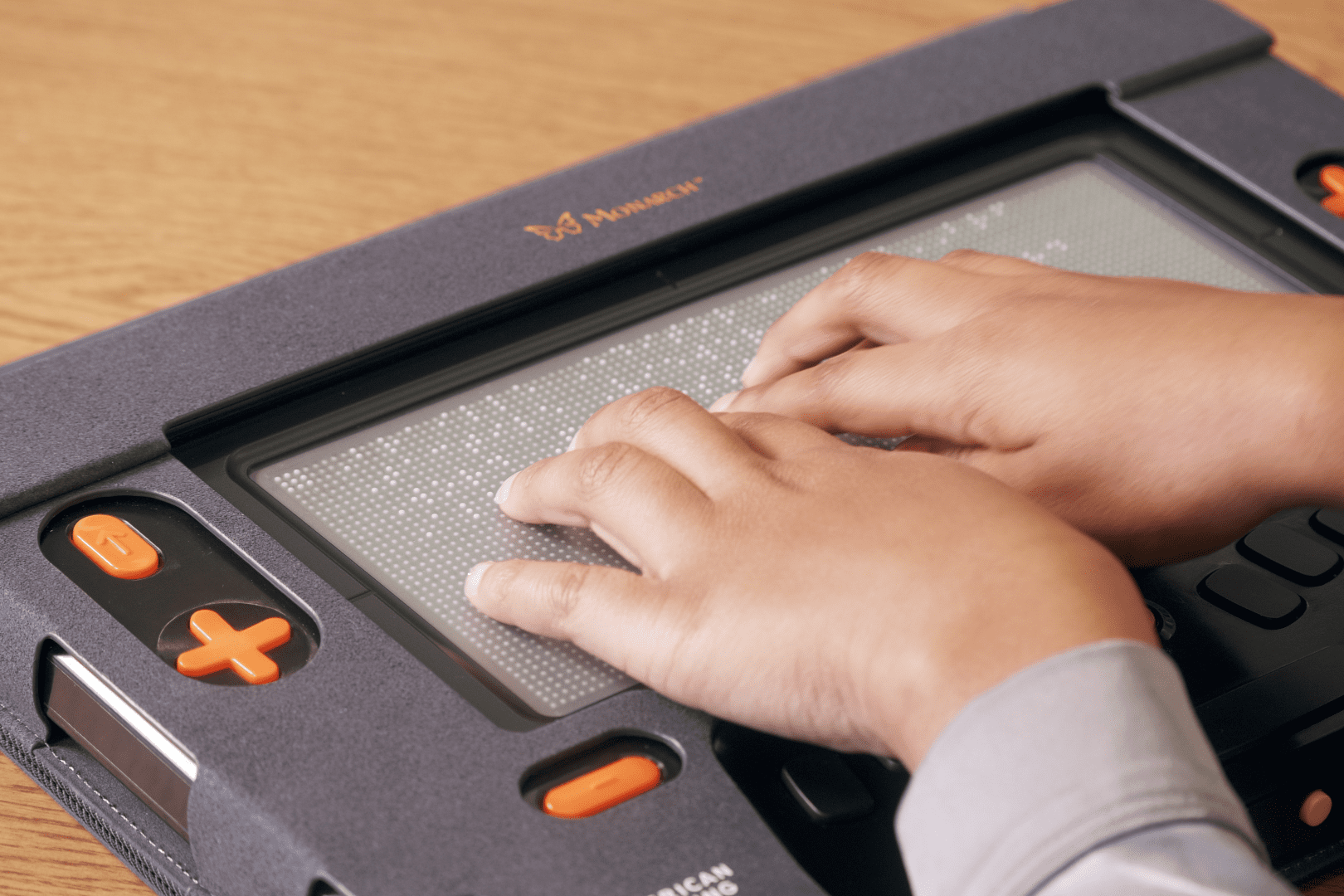
A student’s hands on the Monarch.
While most student teachers work with one or two mentor teachers at a single school site, our semester looked very different. Because my placement was as a Teacher of Students with Visual Impairments (TVI), we traveled to multiple schools each week and worked with five different mentor teachers across two semesters.
This setup is actually very common for TVIs, since students with visual impairments are one of the smallest populations within special education. As a result, TVIs typically serve students spread across several schools or even multiple districts.
Our core mission as TVIs is to help students with visual impairments gain the skills they need to live independent, meaningful lives through the Expanded Core Curriculum (ECC) including compensatory skills (braille or large print), assistive technology, orientation and mobility, independent living skills, social interaction, and more.
Through my year-long student teaching experience, I learned several lessons that I hope will support future TVIs, especially those entering the field with a guide dog of their own.
1. Expect to Fight Through Red Tape
From university paperwork to district requirements and accommodations, there was plenty of red tape to push through. What helped most was consistent communication: staying in touch with my university supervisor, district staff, and mentor teachers every step of the way.
2. Sometimes the Kids Follow Service Animal Etiquette Better Than Adults
On my very first day, I attended an IEP meeting where the Adaptive PE teacher was so captivated by Eve that I wasn’t sure she heard anything else! It was a reminder that adults sometimes need just as much education as students about service animal etiquette.
3. Leave More Commuting Time Than You Think
With students spread across so many campuses, commuting became part of the job. I learned quickly to build extra time into my schedule rideshare denials, students who needed unexpected support, or last-minute meetings could change the day instantly. Flexibility truly became a survival skill.
4. Make Your Own Assessment Sheets Accessible
Not all administrative systems prioritize accessibility for teachers who use screen readers or large print. Taking the time to make my own accessible assessment sheets made my workflow smoother and allowed me to model self-advocacy to my students.
5. Always Have a Backup Plan
Schedules shift constantly in itinerant teaching. Students are absent, field trips happen, meetings run long and sometimes all three occur in the same day. Having backup lessons or alternate activities saved time and frustration again and again.
6. Let Administrators Know You Use a Guide Dog
At the very start of my placement, I made sure my district knew that I use a guide dog. I provided Eve’s ID and vaccination records so everything was on file. This was especially important for emergency situations like drills or lockdowns, ensuring staff knew how to support both of us safely.
7. Include Your Guide Dog in Your Introduction Letter
Many programs ask student teachers to send an introduction letter. I included information about Eve her training, her job, and what staff should expect. This helped set clear expectations and eased a lot of curiosity and anxiety from day one.
8. Use Your Guide Dog as a Motivational Tool
Some students need an extra nudge to stay on task. For some of my students, the chance to spend a few minutes petting Eve after completing an assignment worked beautifully. She became not just a mobility partner, but a classroom motivator.
9. Teach Lessons About Guide Dogs and Service Animals
I loved creating age-appropriate lessons about guide dogs and other service animals for my blind/low-vision students and their sighted classmates. Sometimes I taught these lessons myself; other times, I partnered with the school librarian so every class could participate.
If you’d like to learn more about these materials, check out my post: “Resources to Educate Children About Guide Dogs.”
10. Keep Your University Supervisor in the Loop
If challenges arise, late paperwork, frequent absences, scheduling conflicts tell your university supervisor right away.
I started my placement later than planned due to factors outside my control, and some students were absent more often than expected. Since student teaching semesters are short, every week matters.
This experience taught me that if I ever mentor a student teacher, I’ll make sure my caseload and schedule allow me to support them fully.
11. Why Access to a Braille Embosser Matters
One resource I truly wish I had consistent access to during student teaching was a braille embosser.
For Teachers of Students with Visual Impairments and for blind educators an embosser is not a luxury. It’s an essential instructional and accessibility tool. Having the ability to produce braille materials on demand supports timely instruction, allows for quick adaptations, and ensures students receive materials when they need them, not days later.
Without an embosser this year, I often had to plan far in advance or rely on limited alternatives. While I was deeply grateful for the support of my mentor teachers and districts, there were moments when immediate access to tactile materials would have made instruction more responsive and equitable.
For blind teachers in particular, embossers support independence and professional autonomy. They allow us to read and create materials alongside our students, independently review assessments, and adapt lessons in real time the same flexibility sighted teachers have when printing or modifying materials.
Looking ahead, I’m incredibly grateful that I will have access to an embosser in the upcoming year. Knowing this tool will be available during induction and beyond gives me confidence as I step into the next phase of my career.
If there’s one takeaway for future TVIs and blind educators, it’s this: advocate early for the tools you need. Access to an embosser is foundational to effective, inclusive instruction.
Books That Helped Me Prepare
First Class Teaching by Michelle Emerson
Emerson’s honesty about both her wins and her missteps gave me a realistic picture of teaching. Student teaching rarely goes exactly as planned, and her reflections reminded me that growth often comes through adjustment, not perfection. Her voice felt reassuring during moments when I questioned whether I was doing enough or doing it right.
Tools for TVIs: The Itinerant Teacher’s Handbook By Stacey Chambers
This handbook speaks directly to the logistical realities of itinerant life. Managing multiple campuses, shifting schedules, documentation, and communication across teams requires strong systems. The practical tools in this book helped me think proactively about organization and advocacy, skills that are essential for TVIs, especially when balancing travel, caseload demands, and accessibility needs.
Teach Your Class Off: The Real Rap Guide to Teaching by CJ Reynolds
This book centers something just as important as systems: authenticity. It focuses on teacher presence, classroom culture, and resilience. As someone teaching with a guide dog and building understanding with new staff and students, I was reminded that connection matters. The energy you bring into a space shapes it.
Together, these books grounded me in three essentials: honesty, organization, and authenticity. Each played a role in preparing me not just to complete student teaching, but to grow into the educator I am becoming.
What Comes Next: Beginning Induction
Now that student teaching is complete, the next step on my journey is entering California’s two-year Induction Program. Induction is the final requirement to earn a clear teaching credential in California.
During induction, I’ll work with a mentor, set professional growth goals, collect evidence of my teaching practice, and continue building skills in accessibility, inclusion, and specialized instruction as a TVI.
Completing student teaching was a major milestone, but induction is where I’ll refine my practice, deepen my expertise, and fully transition into my role as a professional educator.
Final Thoughts
Student teaching as a guide dog handler was both challenging and deeply rewarding. Navigating multiple schools, advocating for accessibility, and educating others about service animal etiquette stretched me in all the best ways.
Eve wasn’t just my guide, she became part of my teaching journey. Together, we modeled independence, professionalism, and compassion in every classroom we stepped into.
If you’re a future teacher entering this field, with or without a guide dog, remember: communication, flexibility, and advocacy will take you farther than anything else.
Here’s to what comes next.
Here’s to induction.
And here’s to becoming the teacher I’ve worked so hard to become.
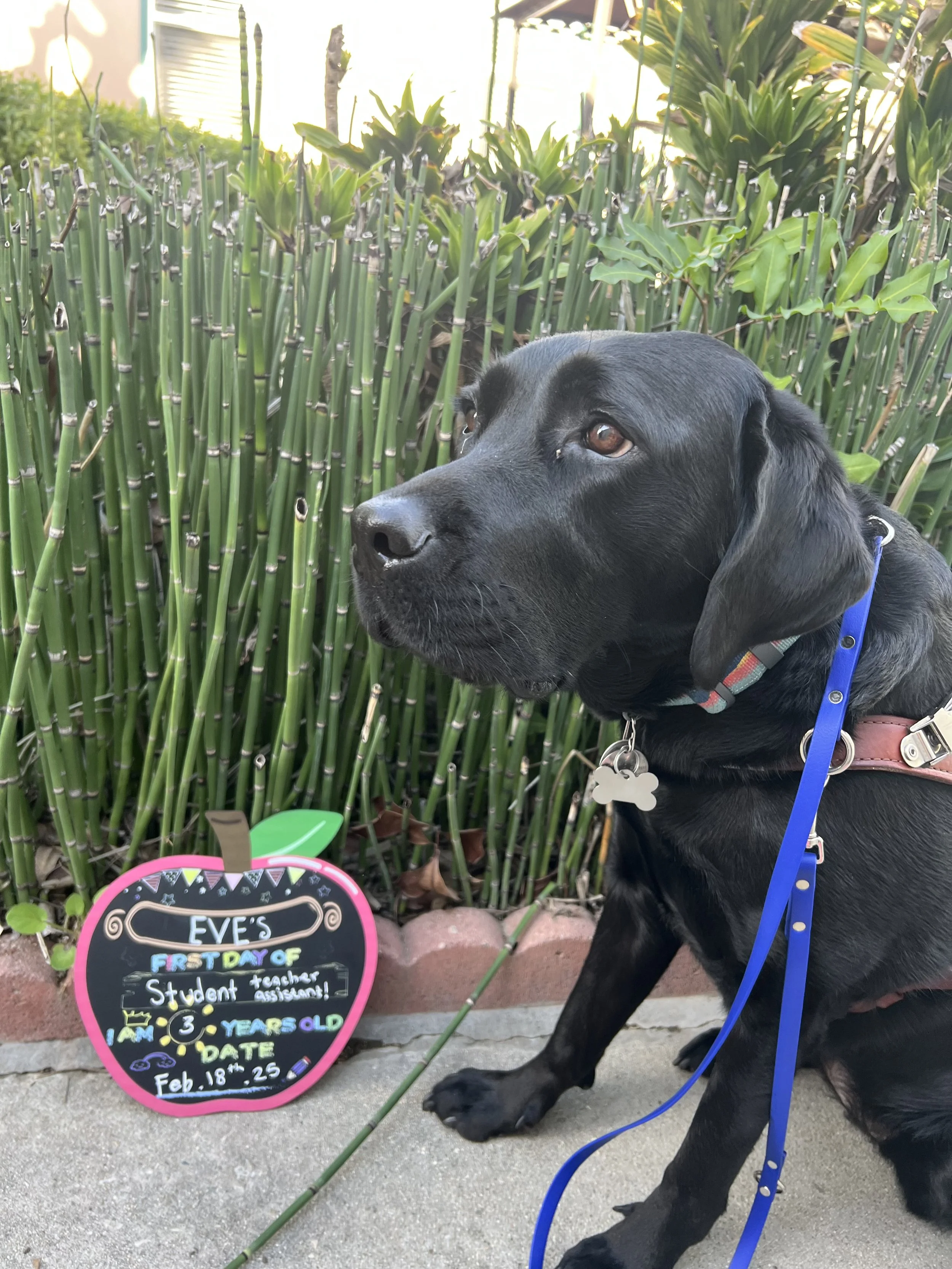
Eve sitting with a sign that reads: Eve’s First Day of Student Teacher assistant. I am 3 years old. Date: Feb 18th, 25
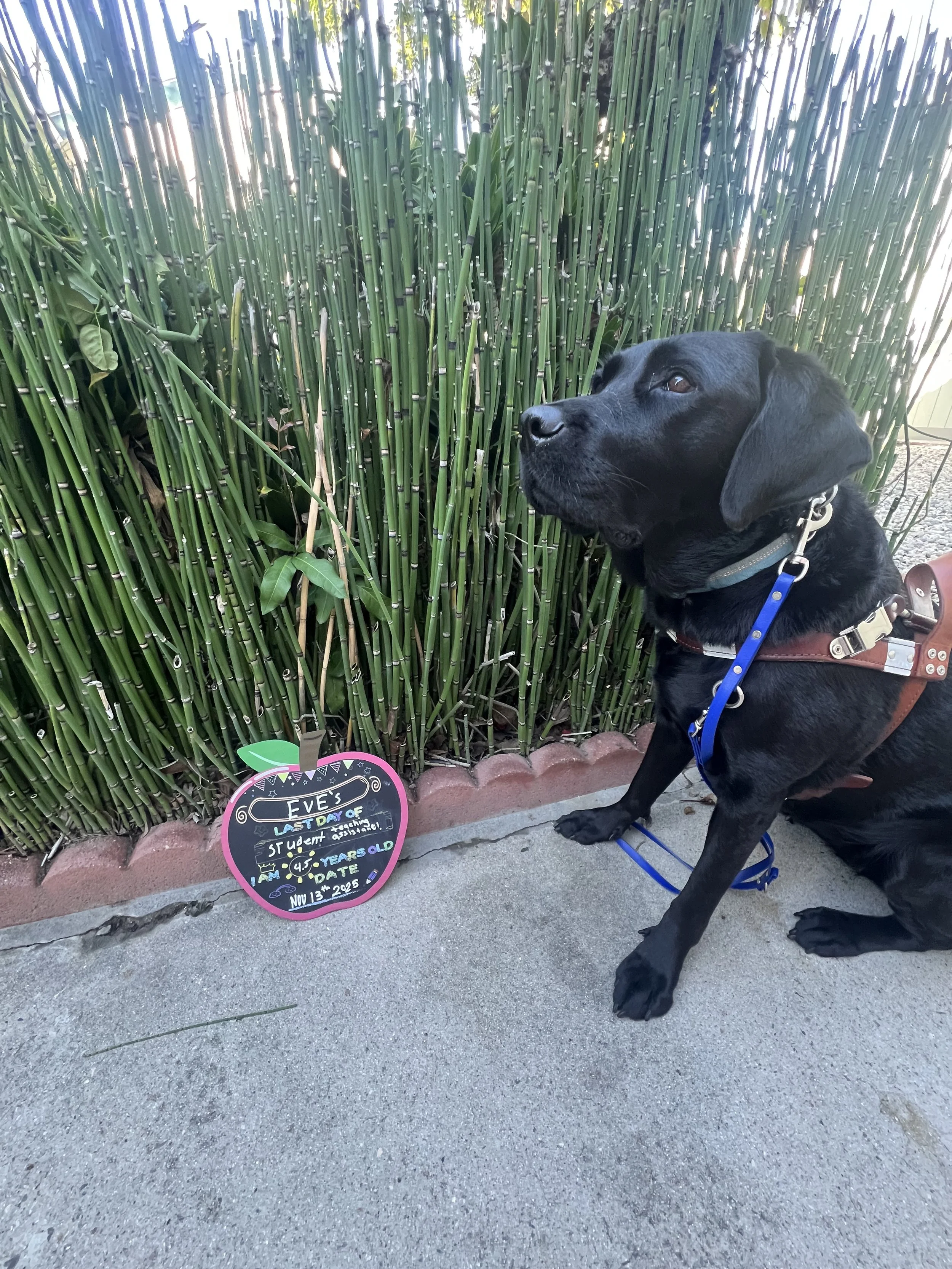
Eve sitting with a sign that reads: Eve’s Last Day of Student Teaching assisting. I am 4.5 years old. Date Nov 13th, 2025.