Tips for taking a Guide Dog to Theme Parks
In writing this post, I do want to acknowledge that not all dogs are suited for busy, high-sensory, highly distractible environments like Disney or other theme parks. Every team is different. If you do choose to take your guide dog to a theme park, here are some things to keep in mind.
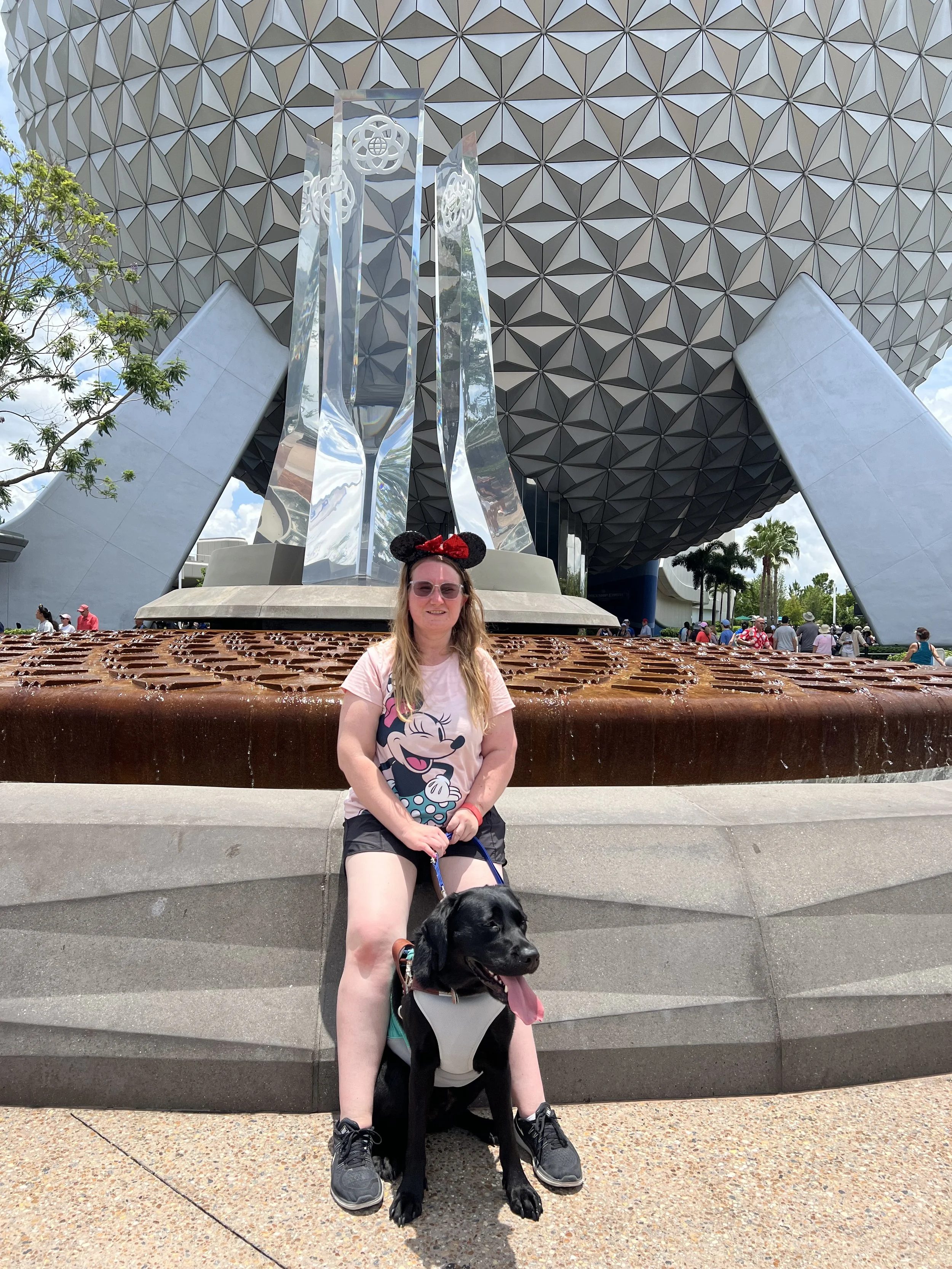
Lindsay and Eve sitting under the Epcot ball.
1. Bring plenty of food and water for both dog and handler
Theme park days can be long, so pack enough food and water for both of you. I bring a Kong water bottle filled with water and plenty of treats and dinner for Eve. For myself, I carry water, granola bars, trail mix, and sometimes a sandwich or wrap.
2. Protect your dog’s paws in hot weather
If visiting in summer, bring booties or Musher’s Secret to prevent burns from hot pavement.
3. Keep your dog cool
A cooling vest can make a big difference. I recommend the Swamp Cooler Zip™ or Swamp Cooler™ Cooling Dog Vest. You can wet the vest in public restrooms or carry a water bottle to keep it damp.
4. Know Where Relieving Areas Are
Before visiting, locate dog-relieving areas to avoid unnecessary stress or issues with staff.
Disneyland: My favorite relieving area is in Star Wars Land. It is easy to find and does not require opening a gate.
Knott’s Berry Farm: I prefer the area between the bumper cars and the wooden roller coaster, which is also ungated.
Universal Studios Hollywood: My favorite relieving area is in the Harry Potter area, which has turf and no gate that must be opened.
Using the wrong area can sometimes lead to issues with staff, so planning ahead matters.
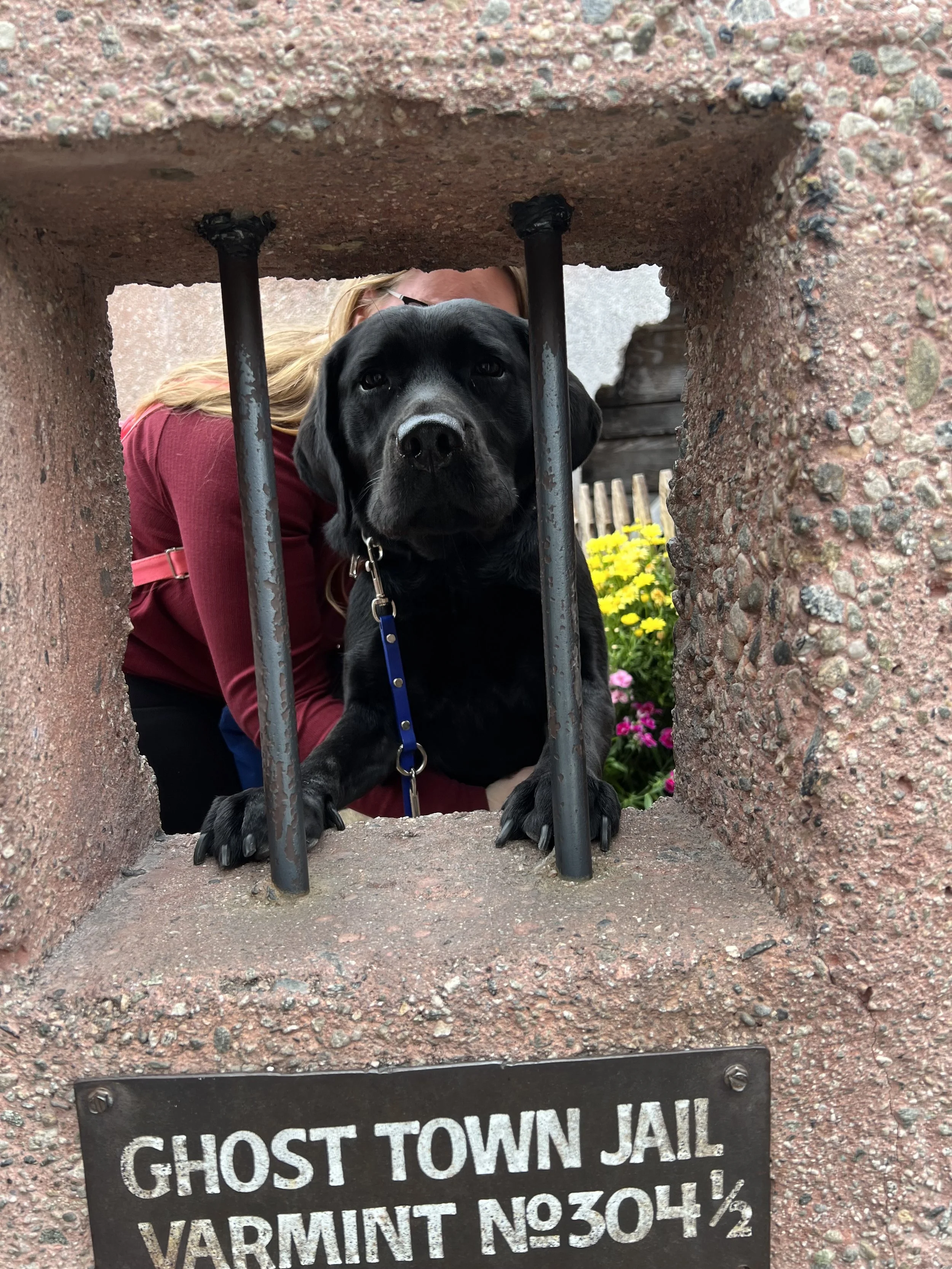
Eve in the Ghost Town Jail at Knots Berry Farm
5. Be Prepared for the Two Legal Questions
In California, theme parks may ask the two legal service animal questions, typically at security or guest services depending on the park. These are the standard questions any establishment may ask:
Is this animal required for a disability?
What service does this animal provide?
At Universal Studios Hollywood, I was asked these questions at guest services. When attending theme parks like Knott’s Berry Farm, I was not asked at all. I’ve also noticed these questions are asked more often in California than in Florida, where I was not asked during a four-day visit. It truly varies by theme park.
6. Use the Disability Access Service (DAS) If Eligible
DAS passes can help avoid narrow or crowded queues where leashes or gentle leaders may get caught. Eve and I do not currently qualify for DAS at Disney parks, but other parks such as Knott’s Berry Farm and Universal Studios Hollywood do offer DAS eligibility for us.
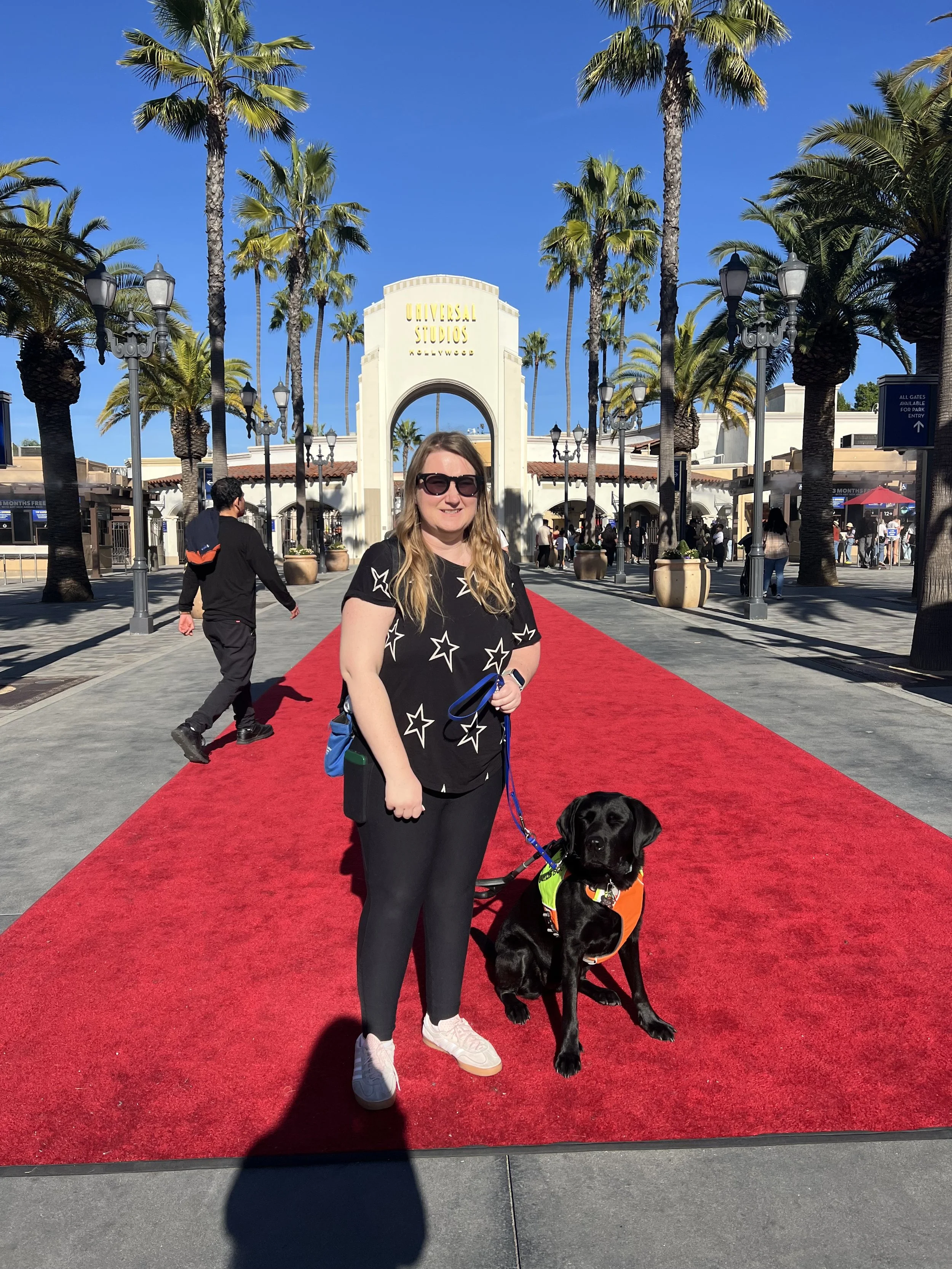
Eve and Lindsey at the gates of Universal Studios Hollywood
7. Take Advantage of Kennels
For rides that do not allow service animals, theme parks offer kennels where a cast member stays with the dog while you ride. Many kennels are located in quieter areas away from ride noise, allowing your dog to rest safely.
One important note: if cast members recommend using the kennel, it usually means you should take them up on that offer. I learned this the hard way by having Eve on the Minions ride when I really should not have.
8. Use Braille and large-print maps
Thanks to the Lighthouse for the Blind’s T-Map program, Disney provides tactile maps with dog-relieving areas marked. Some maps require a deposit or are stationary, and not all are fully up to date.
9. Bring patience
Crowds, scents, and sensory input can be challenging. Praise your dog for good behavior and remember that patience goes a long way.
10. Use the Disney Railroad
At Disneyland, the railroad helps you travel between lands efficiently, often beating crowds and parades.
11. Bring your cane
Even with a guide dog, carrying a cane can be useful when walking between kennels and rides or when your dog can’t accompany you. I’ve found it much faster and safer than relying on a cast member’s arm.
Final Thoughts
By planning ahead and keeping these tips in mind, you and your guide dog can have a safer, more comfortable, and less stressful experience at theme parks.
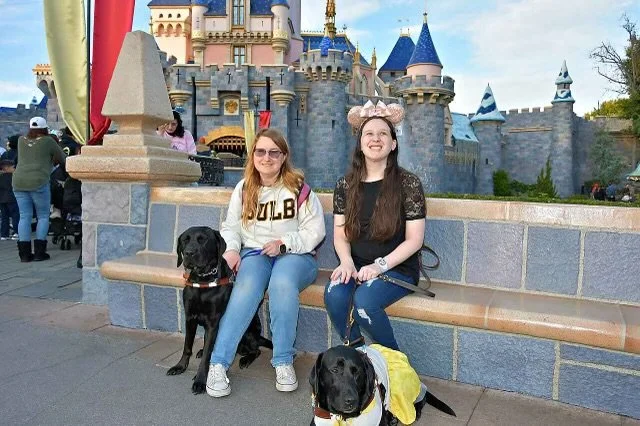
Eve, Lindsay, Shelbi, and Kristen sitting in front of Cinderella’s castle in Disneyland.